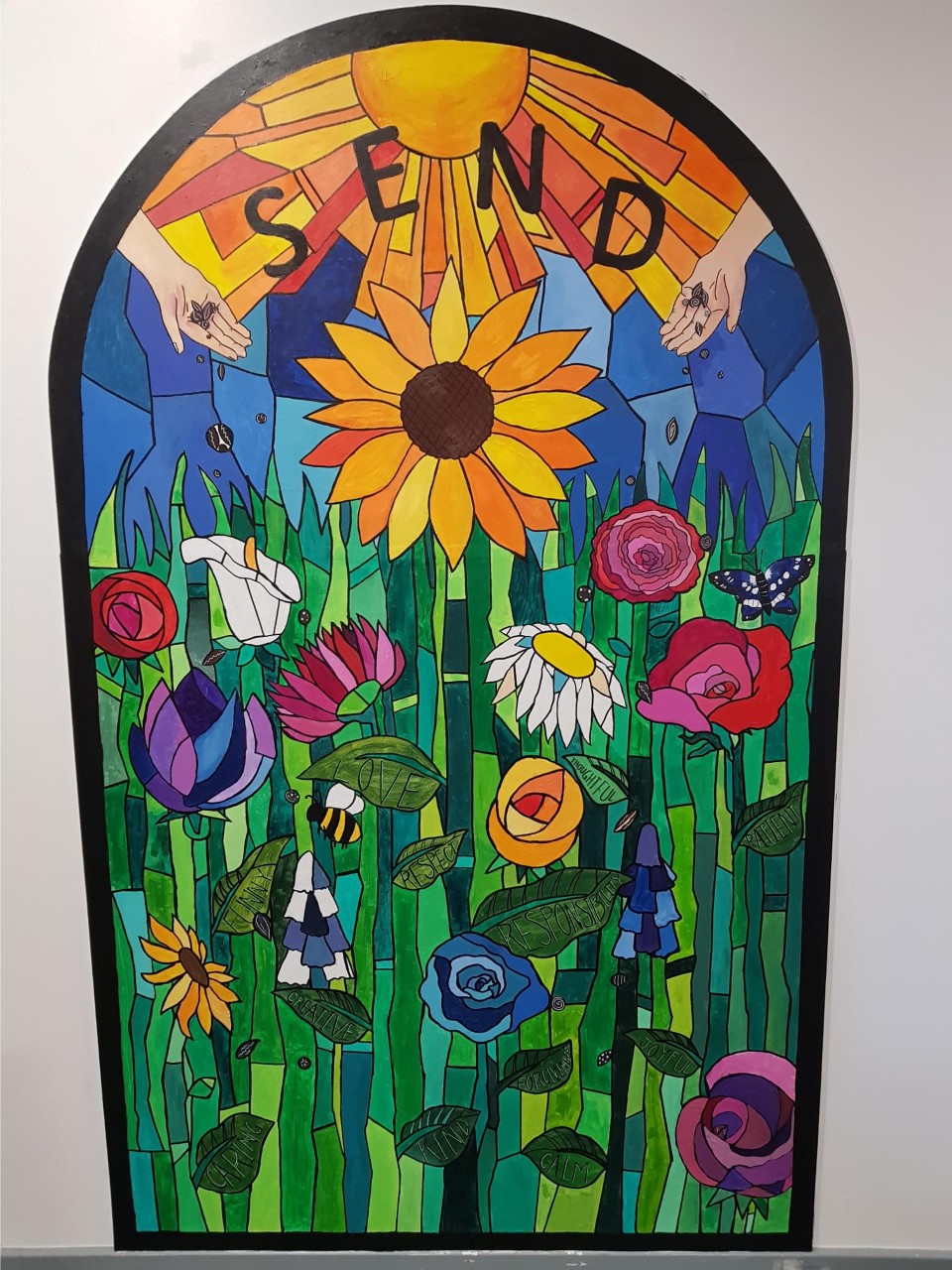
The school's SENDCO is Assistant Headteacher Ms Anya Kolaska. Ms Kolaska can be contacted via sendco@kingsschoolhove.org.uk
King’s School SEND Information Report
King’s School is a mainstream secondary school that currently has children in Key Stage 3, Key Stage 4 and Key Stage 5. The school believes that all children and young people are entitled to an education that enables them to:
- Achieve their best.
- Become confident individuals living fulfilling lives.
- Make a successful transition into adulthood, whether into employment, further or higher education or training.
Under section 65(3)(a) of the Children and Families Act 2014 the Governing Body is required to publish information about Special Educational Needs policy and provision. This information is updated annually and was last updated in October 2025.
1. The kinds of special educational needs for which provision is made at the school:
We currently support children with the following Special Educational Needs and do so in line with the 2014 Code of Practice:
|
Area of need |
Condition |
|
Communication and interaction |
Autism spectrum disorder (ASD) Children and young people with ASD, including Autism, are likely to have particular difficulties with social interaction. They may also experience difficulties with language, communication and imagination, which can impact on how they relate to others. |
|
Speech, language and communication needs (SLCN) Children and young people with speech, language and communication needs have difficulty in communicating with others. This may be because they have difficulty saying what they want to, understanding what is being said to them or they do not understand or use social rules of communication. The profile for every child with SLCN is different and their needs may change over time. They may have difficulty with one, some or all of the different aspects of speech, language or social communication at different times of their lives. |
|
|
Cognition and learning |
Specific learning difficulties (SpLD) Specific learning difficulties (SpLD), affect one or more specific aspects of learning. This encompasses a range of conditions such as dyslexia, dyscalculia and dyspraxia.
Learning difficulties cover a wide range of needs, including moderate learning difficulties (MLD), severe learning difficulties (SLD), where children are likely to need support in all areas of the curriculum and associated difficulties with mobility and communication, through to profound and multiple learning difficulties (PMLD), where children are likely to have severe and complex learning difficulties as well as a physical disability or sensory impairment. |
|
Social, emotional and mental health
|
Social, emotional and mental health (SEMH) refers to a broad array of special educational needs based on a child or young person’s difficulty regulating emotions and behaviour. Children and young people may experience a wide range of social and emotional difficulties which manifest themselves in many ways. These may include becoming withdrawn or isolated, as well as displaying challenging, disruptive or disturbing behaviour. These behaviours may reflect underlying mental health difficulties such as anxiety or depression, self-harming, substance misuse, eating disorders or physical symptoms that are medically unexplained. Other children and young people may have disorders such attention deficit hyperactive disorder (ADHD) or Obsessive-Compulsive Disorder (OCD). |
|
Sensory and/or physical |
Sensory and physical needs cover a range of hearing, visual, and physical needs. Many children and young people with vision impairment (VI), hearing impairment (HI) or a multi-sensory impairment (MSI) require specialist support and/or equipment to access learning. Children and young people with an MSI have a combination of vision and hearing difficulties. Some children and young people with a physical disability (PD) require additional ongoing support and equipment to access all the opportunities available to their peers. |
2. The school's policies for the identification and assessment of pupils with special educational needs:
The school’s policy for identifying children with SEN is in line with the SEND Code of Practice 2014. The school recognises that a child or young person has SEN if they have a significant barrier to learning or disability which calls for special educational provision to be made for them. As defined in the 2014 Code of Practice, the school accepts that a young person has a learning difficulty or disability if they: have a significantly greater difficulty in learning than many others of the same age; or if they have a disability which prevents or hinders them from making use of educational facilities of a kind generally provided for others of the same age in mainstream schools or mainstream post-16 institutions.
The school uses internal data and observations and works closely with parents, external agencies and primary schools to ensure that all students with SEN are identified and supported effectively.
|
The school uses a SEND Triage system where members of staff can make a referral to the SEND team if they have concerns about possible SEND needs and the impact on a student’s progress. Parents are also able to raise concerns about possible areas of need by emailing the SENDCO. |
Where a concern is raised our first step is to gather information from your child’s teachers and any other professionals working with them.
We will review progress data, information received from previous schools and information gathered from teachers. We will also liaise with young person themselves and with parents. This could be via email, a telephone call or in a face-to-face meeting. |
Once information has been gathered members of the SEND team will identify any additional support that a student may require to access learning.
This could be through: · Adaptations in the classroom; · Time-limited interventions outside the classroom; · Support from external professionals. |
3. Information about the school’s policies for making provision for students with special educational needs whether or not pupils have Education and Health Care Plans, including:
(a) how the school evaluates the effectiveness of its provision for such pupils;
- The school evaluates the effectiveness of its provision for all students, regardless of SEN, through the outcomes they achieve and their progression to further stages of education.
- All students are set challenging progress targets for their learning achievements and the impact of teaching and additional support is measured by the school through student outcomes.
- Children with SEN are expected to make equivalent progress to their peers, relative to prior attainment.
- Students with EHCPs, and those in receipt of higher levels of support from the SEND team, also receive regular progress reviews through the monitoring of personalised ‘Learning Support Plans’ and through the EHCP annual review process.
- The school monitors the effectiveness of its main and wider curriculum through the take up of and participation in additional activities.
- The evaluation of all aspects of provision includes input from students and parents.
(b) the school’s arrangements for assessing and reviewing the progress of pupils with special educational needs.
- Whole school assessment and monitoring procedures are in place and apply to all students at all levels. SEN children are assessed in the same way as all other children. The school follows the graduated approach to support students, as outlined by the Code of Practice.
- Structures are in place to ensure on-going regular assessment of outcomes which are discussed with the child and parents. These include reporting points and parent-teacher meetings.
- Students are also assessed following any periods of targeted intervention. The school’s assessment procedures ensure that all progress is closely monitored at all times and that any concerns are rapidly raised, and the necessary support made available through the subject teacher to enable progress (please refer to the SEND policy which can be found here).
- Parents are informed when additional learning provision is provided for their child (as per the SEND Code of Practice, section 6.39).
- The SENDCO works together with the SLT to ensure standards are maintained across the school.
(c) the school’s approach to teaching students with special educational needs.
- Children with SEN are expected to be able to work within mainstream classes, given high quality teaching and work clearly adapted to their individual needs.
- Students’ needs are communicated clearly to their teachers and other members of staff through our school MIS (management information system). Some students who need a wider range of specific adaptations may also have a One Page Pupil profile.
- Specific specialist help may be made available for short term support to raise levels where there is a clear indication that this will achieve expected outcomes. This may be through time-limited interventions.
(d) how the school adapts the curriculum and learning environment for students with special educational needs.
- The school would not expect to make significant adaptations to the curriculum to enable children to succeed but would make any reasonable adjustments to the learning environment to ensure children have opportunity wherever possible to progress at the same level as their peers.
- The school has an open-door policy for all students and supportive conversations with appropriate members of staff are always available in addition to regular planned meetings.
(e) additional support for learning that is available to pupils with special educational needs.
- Additional support is provided through short term targeted interventions which may be in class or require withdrawal from some lessons.
- Some students, who are identified as having SEN and are in receipt of higher levels of support, have learning support plans that are discussed with themselves and their parents and, where appropriate, these include arrangements for accessing the curriculum.
(f) activities that are available for students with special educational needs in addition to those available in accordance with the curriculum.
- All children are expected to be involved in a full range of school activities. Should a particular disability mean that any activity is less accessible to a student who wishes to take part in it then the school will use its best endeavours to enable participation. Where it is not possible to adapt the activity to enable the student to take part then the school will provide an alternative activity and engage with the student in determining and planning this.
(g) support that is available for improving the emotional and social development of students with special educational needs.
- The school’s inclusion and pastoral systems support all children with close focus on their social, emotional, behavioural, and mental health development.
- Where necessary the school has access to external support services who can be used for short term intervention.
- In the case of more severe need, outside agency support would be sought as a matter of course.
- The school has an anti-bullying policy which applies to all students and operates in line with the school’s Character Education approach to behaviour management and can be found here.
- The school has links to health bodies and social care bodies through the local authority and can draw on these if there is a significant need.
4. In relation to mainstream schools and maintained nursery schools, the name and contact details of the SEN co-ordinator:
- The school’s SENDCo is Ms Kolaska, who can be contacted using the sendco@kingsschoolhove.org.uk email address or through the main contact details for the school.
- The school also has a full time Assistant SENDCo, Mrs Hamilton.
5. Information about the expertise and training of staff in relation to children and young people with special educational needs and about how specialist expertise will be secured.
- The school goes out of its way to employ outstanding teachers to ensure that all children receive the highest possible quality of education. All recent research has shown that progress is made in direct relationship to the quality of teaching.
- Support staff, including Learning Support Assistants, Inclusion Support Officers, and qualified teachers normally work within areas where they have specific expertise to enable children to always make expected levels of progress and ensure all programmes of support are tailored to specific need.
- All staff receive induction and regular update training on supporting children with SEND.
- Where appropriate, specialist expertise is sought through the Local Authority, Russell Education Trust and other relevant agencies (e.g. hearing impairment).
6. Information about how equipment and facilities to support children and young people with special educational needs will be secured.
- Specialist equipment to support individual needs is secured on an individual basis with the advice, where appropriate, of external specialist agencies.
7.The arrangements for consulting parents of children with special educational needs about, and involving such parents in, the education of their child.
- Parents/carers of students identified as having SEND are given opportunities each academic year to consult with the school, for example at parents’ evenings and through academic reports. Students with Education Health Care Plans (EHCPs) will have an annual review. Parents of all other students with SEND are able to consult with a member of Learning Support staff or the SENDCO to specifically discuss their child’s needs.
- We have clear transition arrangements in place for Year 7 students: In the first term, Year 7 parents will meet with the form teacher; later in the year a written report will be sent home and parents are welcome to come to the school to discuss any concerns they may have; in the third term students with EHCPs will usually have an annual review. You can find more information about our transition arrangements for young people with SEND here.
- We do admit students with SEND as in-year admissions where places are available and ensure that communication with parents/carers and the student's previous school is strong to enable a smooth transition.
8. The arrangements for consulting young people with special educational needs about, and involving them in, their education.
- Wherever possible and advisable, children are involved in the review process and that of setting targets for the next session. The school believes that young people have a right to be involved in making decisions and exercising choices. They have a right to receive and impart information, to express an opinion, and to have that opinion considered in any matters affecting them. Consequently, the school is committed to working in partnership with the child, parents, carers and outside agencies to identify needs.
9. Any arrangements made by the governing body or the proprietor relating to the treatment of complaints from parents of students with special educational needs concerning the provision made at the school.
- If a parent or carer is concerned about the progress that their child is making at the school they should contact the SENDCO in the first instance.
- If the parent or carer remains unhappy about the outcome, the Headteacher should be contacted. These are the first stages of the school’s complaints policy – which can be found here.
10. How the governing body involves other bodies, including health and social services bodies, local authority support services and voluntary organisations, in meeting the needs of pupils with special educational needs and in supporting the families of such pupils.
- Where a student with SEND is not making appropriate progress and we feel that they need advice and support from external professionals, we will discuss such a need with parents.
- If it is felt appropriate, we will then refer a student to an external agency and/or professionals for diagnosis, support or advice.
- After such a referral, we will work with the external agency to support such students, using agency support and advice.
- We work with the Brighton and Hove Inclusion and Support Service (BHISS), including the educational psychology service, the literacy support service, the speech and language and autistic spectrum service, and the social emotional and mental health support team. We also work with other external agencies such as the Child and Adolescent Mental Health Services (CAMHS), Speech and Language Service, Literacy Support Service, Counsellors and the Autism Support Service.
11. Contact details of support services for the parents of students with special educational needs:
All of the LA provided support services are contactable through BHISS as below -
Brighton & Hove Inclusion Support Service (BHISS) Portslade Hub Mile Oak Road Portslade BN41 2PG Tel: 01273 293481
12. The school’s arrangements for supporting students with special educational needs in transferring between phases of education or in preparing for adulthood and independent, living.
- The school works closely with all children as they approach times of transition. There is close co-ordination with all local primary schools to ensure smooth transition from KS2 to KS3, which includes visits to the primary schools concerned and a range of induction visits for new children.
- At the end of KS3, meetings will be focused on transition to KS4 and ensuring the right pathways are established and clearly understood by a child and their parents/carers.
- Students with SEN are also supported post-16 with transition to their next phase of education, employment or training and students leaving at the end of KS5 are supported with the UCAS process and appropriate careers education.
13. Information on where the local authority’s local offer is published
The local authority’s local offer is published on its website: http://www.brighton-hove.gov.uk/content/children-and-education/brighton-hoves-local-offer
14. Relevant school policies as noted in the report:
- SEND Policy - POLICY - Special Educational Needs.pdf (russelleducationtrust.org.uk)
- Anti-Bullying - POLICY - Anti-Bullying.pdf (russelleducationtrust.org.uk)
- Complaints - PROCEDURE - Complaints.pdf (russelleducationtrust.org.uk)
- The Special Educational Needs Code of Practice 2014 -
https://www.gov.uk/government/publications/send-code-of-practice-0-to-25