
Pathways
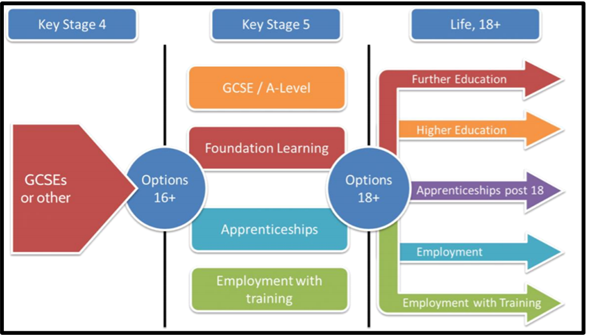
There is plenty to consider when deciding your next step post 16. The main thing to point out is that everyone needs to be in learning until 18. This does not mean staying in school, you can opt to study or train in any of the following ways:
- Studying full time in school, college or with any training provider
- Working or volunteering, combined with a part-time education or training
- Apprenticeship, traineeship or study programme
Department for Education Post-16 Choices Animation
Further Education
You have three options for further education study in the UK:
School Sixth Form: This will be familiar as they operate within the secondary School and are integrated into the school structure. They offer primarily A Levels and BTEC qualifications.
Sixth Form College: There are a number of highly regarded sixth form colleges in Brighton and Hove. These function in a similar way to school sixth forms, but they are not connected to any school. They will offer a wide range of A Level and BTEC qualifications and some vocational training. Class sizes will vary according to subject.
Further Education Colleges (FE): These are again separate to schools and offer a wider range of traditional A Level, BTEC, T Levels and other vocational courses such as NVQ's (National Vocational Qualifications). They will often offer foundation courses and opportunities to resit GCSE's alongside post 16 study.
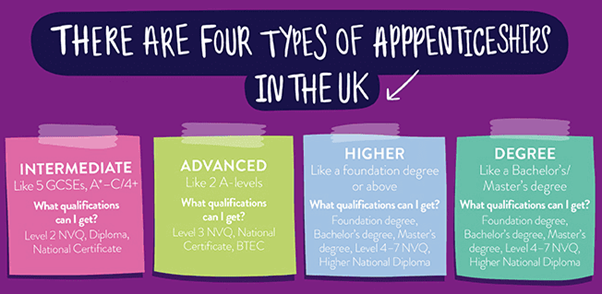
apprenticeships
 Amazing
Apprenticeships - Understanding Apprenticeships
Amazing
Apprenticeships - Understanding Apprenticeships
Amazing Apprenticeships - Meet the Employer
T-Levels
T Levels are a high-quality alternative to A Levels and BTEC courses. Equivalent to three A Levels, they focus on industry-specific training to help students gain the vocational skills needed for higher education, employment, or apprenticeships.
The programme runs over two years, with students spending 80% of their time in the classroom and 20% on a meaningful industry placement lasting a minimum of 45 days. This hands-on experience allows students to apply their learning in real-world settings while giving employers early access to emerging talent.
What do I need to study T Levels?
These can vary depending on the provider and the specific T Level course, but generally, you’ll need:
GCSEs at grade 4 or above (especially in English and maths)
Some courses may also require science or other relevant subjects, depending on the sector (e.g. engineering or health).
Where could this lead?
T Levels do qualify you to go to university or you may prefer to go into the workplace with your work experience gained on the course.
Where could this lead?
T Levels do qualify you to go to university or you may prefer to go into the workplace with your work experience gained on the course.
To find out more visit: www.tlevels.gov.uk/
What are T Levels - Information Video